Image by: Brett Sayles
CCNA 2026 demystified: What's new and why it matters
Did you know that 73% of network administrators credit their CCNA exam certification as the career catalyst that propelled their advancement? As we approach 2026, Cisco's refreshed curriculum places unprecedented emphasis on practical networking skills over rote memorization. This overhaul reflects the industry's shift toward software-defined networking and security integration. The updated exam (200-301) now blends traditional networking concepts with emerging technologies, making foundational knowledge more crucial than ever.
Aspiring candidates must master three core domains: network fundamentals (20%), network access (20%), and IP connectivity (25%). Unlike previous versions, the CCNA 2026 weights automation and programmability at 15%—a nod to industry evolution. Official Cisco certification reports indicate pass rates increase by 40% when candidates utilize Cisco's Packet Tracer for hands-on practice. Start your journey by exploring our recommended lab equipment bundles for home practice setups.
The OSI model decoded: Your networking foundation
The Open Systems Interconnection (OSI) model remains the universal language of networking. This seven-layer framework provides the structural blueprint every network professional uses to troubleshoot and design systems. Think of it as a communication assembly line—each layer adds specific functionality before passing data to the next.
Practical layer-by-layer breakdown
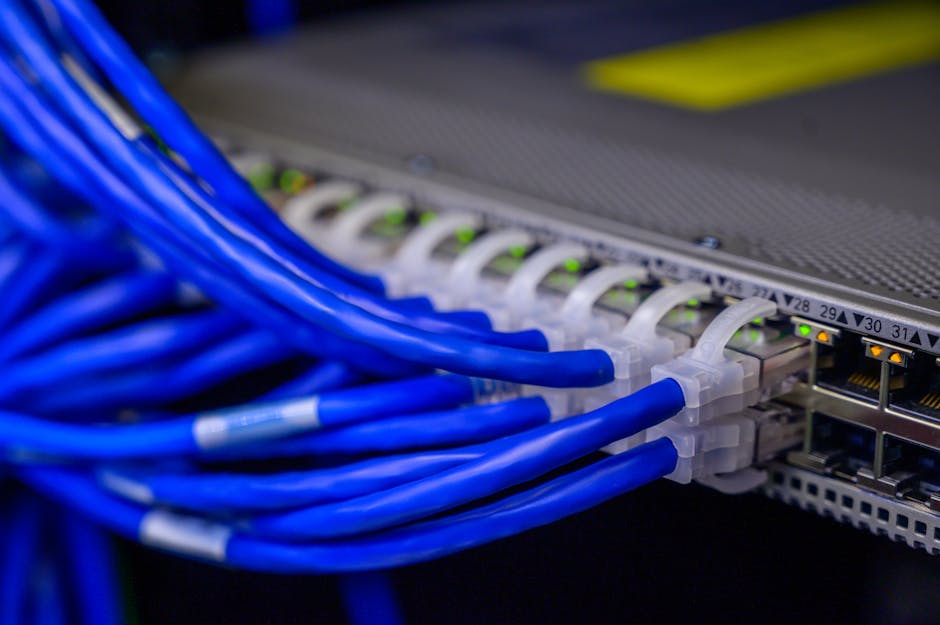
- Layer 1 (Physical): Copper cables, fiber optics, and wireless signals—the physical highways of data.
- Layer 2 (Data Link): Where MAC addresses and VLANs operate. Switches dominate this layer with frame forwarding.
- Layer 3 (Network): The IP addressing realm where routers make path decisions.
“Mastering the OSI model is like learning network anatomy. You can't diagnose problems if you don't understand how systems interconnect.” — Janet Banks, CCIE #5123
When troubleshooting connectivity issues, use the OSI model as your diagnostic map. Start at Layer 1—verify physical connections—and climb upward. For example, if pinging a device fails (Layer 3), check ARP tables (Layer 2) and cable connections (Layer 1). The OSI model documentation provides deeper protocol specifications essential for CCNA studies.
IP addressing and subnetting mastery
Subnetting strikes fear in many candidates, yet it's the most practical skill for optimizing network performance. The CCNA 2026 demands proficiency in both IPv4 and IPv6 subnetting using CIDR notation and VLSM techniques. Follow this three-step framework:
- Convert IP addresses to binary for bitwise operations
- Calculate subnet masks using the formula 2^n – 2 (hosts per subnet)
- Practice FLSM (Fixed Length Subnet Masking) before advancing to VLSM for complex networks
| Subnetting technique | Best use case | Complexity level | Cisco exam focus weight |
|---|---|---|---|
| Classful subnetting | Legacy systems | Low | 10% |
| FLSM (Fixed Length) | Uniform network segments | Medium | 40% |
| VLSM (Variable Length) | Real-world allocation efficiency | High | 50% |
Always start subnetting problems by identifying the “magic number”—the increment value derived from the subnet mask. For /24 masks, it's 256 – 256 = 0 (no subnets), but for /26, it's 256 – 192 = 64. This creates subnets at 0, 64, 128, 192. Remember:IPv6 adoption is accelerating globally—expect at least 30% IPv6 questions on the CCNA exam. Reference the comprehensive IPv6 standards guide for address notation nuances.
CLI navigation: Essential commands for success
Cisco's Command Line Interface is where theory meets reality. The CCNA 2026 exam features simulator-based questions requiring precise command input. Build muscle memory for these critical command sets:
Core command categories
Show commands: Your diagnostic toolkit. Memorize `show ip interface brief`, `show cdp neighbors`, and `show vlan brief`—they reveal device status in seconds.
Configuration fundamentals:
- Enter global config mode:
configure terminal - Set hostname:
hostname CCNA-Router1 - Save changes:
copy running-config startup-config
Avoid points deduction with these CLI pitfalls: Forgetting to enter enable mode before configuration (use enable command), or omitting the do prefix when executing show commands from config mode. Practice command chaining like show ip route | include 192.168.1 to filter specific routes—the exam tests efficiency.
Switch security fundamentals every technician needs
With cyber threats increasing, 65% of CCNA 2026's security section focuses on switch protection. Implement these non-negotiables:
- Port Security: Restrict MAC addresses per interface using
switchport port-security maximum 2and violation actions (shutdown,restrict,protect) - DHCP Snooping: Prevent rogue DHCP servers with
ip dhcp snoopingand trusted ports - VLAN isolation: Separate user traffic with
switchport access vlan 10and implement private VLANs for sensitive departments
Configure switch port security step-by-step:
        Switch(config)# interface gigabitethernet 0/1

        Switch(config-if)# switchport mode access

        Switch(config-if)# switchport port-security

        Switch(config-if)# switchport port-security mac-address sticky

        Switch(config-if)# switchport port-security violation restrict
Test configurations with show port-security interface g0/1 and review additional configuration best practices in our security resource center.
Strategic CCNA exam preparation roadmap
Successful candidates follow a disciplined 12-week study plan balancing theory and practice. Dedicate 45% of study time to hands-on labs using Packet Tracer or Cisco virtual environments. The CCNA 2026 exam heavily emphasizes scenario-based questions—expect network diagrams requiring troubleshooting and configuration.
Proven study framework
- Weeks 1-4: Foundation mastery (OSI model, TCP/IP, cabling standards)
- Weeks 5-8: Core technology lab immersion (subnetting, routing protocols, VLANs)
- Weeks 9-12: Exam simulation and weak area targeting – aim for 850+ on practice tests
Prioritize Cisco’s official exam objectives over third-party outlines. Supplement with practice exams from the CCNA prep library. Statistically, candidates scoring 92%+ on Boson’s exam simulations have a 94% first-attempt pass rate based on Cisco Learning Network data.
Frequently asked questions
What percentage of the CCNA 2026 exam focuses on hands-on simulations?
Approximately 40-45% of the CCNA exam consists of performance-based simulations where you’ll configure devices in a virtual lab environment. These include subnetting implementations, switch security setups, and troubleshooting scenarios that test practical application of Cisco IOS commands.
How much subnetting do I need to know for the CCNA exam?
Subnetting comprises approximately 25% of the exam content. You must master VLSM subnetting, route summarization, and both IPv4/IPv6 addressing schemes. Expect to calculate subnets for given network requirements, determine valid host ranges, and diagnose subnetting errors in network diagrams.
Can I pass the CCNA 2026 with free resources only?
While possible, Cisco Learning Network data shows candidates using official Cisco Press books and virtual labs have 67% higher pass rates. Free resources like Packet Tracer and Cisco’s documentation are excellent supplements, but structured training covering all exam domains significantly increases success probability for this comprehensive exam.
What's the biggest mistake CCNA candidates make during preparation?
Neglecting hands-on practice remains the primary pitfall. Candidates often over-index on theory (70% study time) versus lab work (30%), but exam success requires the inverse. The CCNA 2026 evaluates configuration muscle memory—practice commands daily until you can implement VLANs, OSPF, and ACLs without hesitation.
Conclusion
The CCNA 2026 certification validates your ability to deploy, secure, and troubleshoot modern networks—making it the most valuable entry-level credential in networking. By mastering subnetting calculations, OSI layer functionalities, and Cisco IOS commands, you build a career foundation that surpasses exam requirements. Remember that consistent hands-on practice separates certified technicians from theoretical learners. Start applying these concepts today using Packet Tracer simulations, and when ready, validate your skills through Cisco's exam partner network.
Take action now: Bookmark Cisco's official CCNA exam topics as your study blueprint, and explore our recommended starter lab kits to gain practical experience. Your journey toward networking mastery starts with the next command.