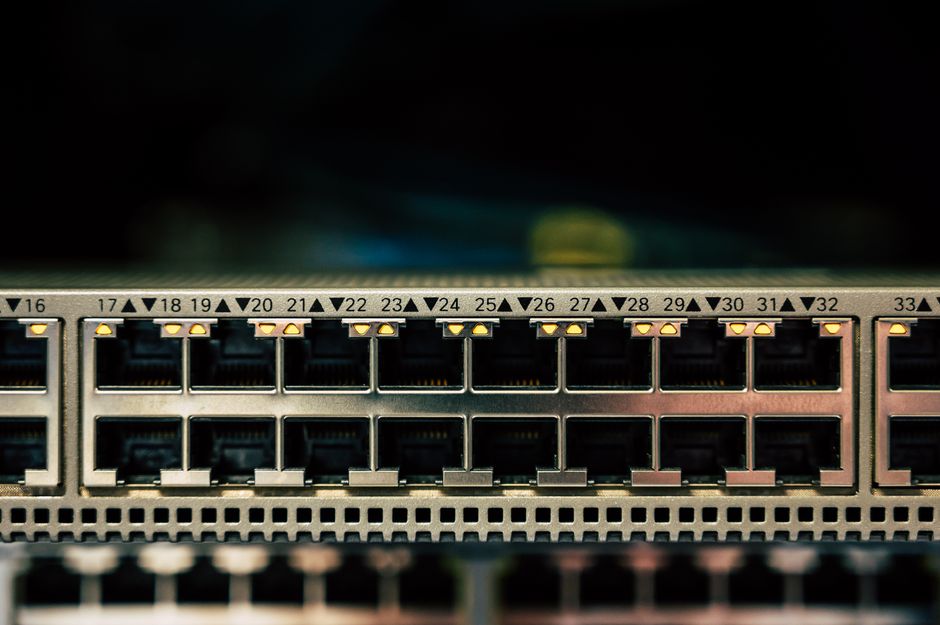
Image by: Brett Sayles
Imagine a global enterprise network experiencing a sudden link failure in a regional data center. Within milliseconds, the network reroutes traffic, maintaining seamless connectivity for thousands of users. Now, imagine that same failure occurring on a backbone connection between two major internet service providers. The response time and the method of rerouting are fundamentally different. For enterprise network designers, choosing between OSPF versus BGP is not merely a technical preference; it is a strategic decision that defines the stability, scalability, and performance of the entire infrastructure. In this comprehensive guide, we will dissect the technical nuances of Open Shortest Path First (OSPF) and Border Gateway Protocol (BGP), helping you determine exactly when to deploy each in modern, high-availability environments.
The architectural divide: IGP vs EGP
To understand the debate of OSPF versus BGP, one must first grasp the fundamental classification of routing protocols. In the world of networking, protocols are divided into two primary camps: Interior Gateway Protocols (IGPs) and Exterior Gateway Protocols (EGPs). This distinction is based on the concept of an Autonomous System (AS)—a collection of networks under a single administrative control.
IGPs, such as OSPF, are designed to operate within an AS. Their primary mission is to find the fastest, most efficient path between internal nodes. They operate with a high degree of trust; every router in an OSPF area generally shares a complete map of the topology. This allows for incredibly rapid calculation of the shortest path using the Dijkstra algorithm. When a link goes down, the entire area is notified almost instantly, allowing for sub-second convergence.
In contrast, BGP is the standard EGP used to exchange routing information between different Autonomous Systems. BGP does not care about the internal topology of a neighboring network; it cares about the “reachability” of prefixes and the “policy” required to get there. While an IGP seeks the shortest path based on metrics like bandwidth or delay, BGP seeks the “best” path based on complex attributes like AS-Path length, Local Preference, and Multi-Exit Discriminators (MED). This distinction is critical for Autonomous System management and internet-scale routing.
“The distinction between IGP and EGP is the difference between a local GPS navigating a city’s streets and an international flight planner managing routes between continents.”
For engineers looking to optimize their enterprise network infrastructure, understanding this boundary is the first step toward a resilient design. Using an IGP to connect to the internet is a recipe for disaster due to scale, while using BGP for every internal switch connection is an unnecessary administrative burden.
OSPF: The engine of internal convergence
Open Shortest Path First (OSPF) is a link-state routing protocol that has become the industry standard for internal enterprise routing. Unlike distance-vector protocols that only know the distance and direction to a destination, OSPF routers possess a “Link State Database” (LSDB). This database acts as a complete, synchronized map of the entire network area.
Link-state mechanics and the Dijkstra algorithm
Every OSPF router generates Link State Advertisements (LSAs) that describe its local links and neighbor states. These LSAs are flooded throughout the area, ensuring every router has an identical view of the topology. Once the LSDB is synchronized, each router runs the Shortest Path First (SPF) algorithm to build a loop-free tree of the network. This mathematical precision is why OSPF is so effective at preventing routing loops in complex topologies.
Hierarchy and Area design
One of OSPF’s greatest strengths—and its greatest complexity—is its hierarchical structure. To prevent the SPF calculation from becoming too resource-intensive as a network grows, OSPF utilizes “Areas.” A central Area 0 (the backbone area) connects all other non-backbone areas. This segmentation limits the scope of LSA flooding and contains the impact of topology changes. When a link flaps in Area 10, routers in Area 20 do not necessarily need to rerun a full SPF calculation, provided the area boundaries are properly managed through Area Border Routers (ABRs).
When designing an OSPF environment, engineers must balance the number of areas against the need for simplicity. Too many areas can lead to complex troubleshooting, while too few can lead to bloated LSDBs that tax the CPU of older networking hardware. For modern high-speed LANs and campus networks, OSPF remains the gold standard for its rapid convergence and deep visibility into the local topology.
BGP: The protocol of global scalability
While OSPF is built for speed and internal visibility, BGP is built for scale and control. BGP is a path-vector protocol, which means it doesn’t track individual links or “hops” in the traditional sense; instead, it tracks the sequence of Autonomous Systems that a packet must traverse to reach its destination. This makes BGP uniquely suited for the massive, decentralized nature of the internet.
The concept of policy-based routing
In an IGP like OSPF, the metric is usually a mathematical derivative of cost or bandwidth. In BGP, the “metric” is replaced by a suite of attributes. This allows network administrators to implement sophisticated policies. For example, an enterprise can decide to prefer one ISP over another not because it is “faster,” but because it is cheaper or more reliable. Through attributes like Weight, Local Preference, and AS-Path Prepending, BGP provides a level of granular control that is impossible in OSPF.
Scalability and the BGP table
The internet routing table currently contains nearly a million prefixes. No link-state protocol could ever handle this volume because the SPF calculation would never finish. BGP handles this through incremental updates and by only sharing the best path to a destination. Instead of knowing every single link in a remote network, a BGP router only needs to know which Autonomous System to hand the traffic to next. This abstraction is what allows the global internet to function without collapsing under the weight of its own metadata.
In modern data centers, we are seeing a rise in “Internal BGP” (iBGP) used in conjunction with Layer 3 switching architectures. This “BGP-only” approach, often seen in massive Clos topologies, allows for incredible scalability and predictable traffic engineering, though it requires a significantly higher level of configuration expertise than traditional OSPF deployments.
Technical deep dive: convergence, scale, and resources
When deciding between OSPF versus BGP, the technical decision often hinges on three specific variables: how fast the network recovers, how large the network can grow, and how much hardware power is required. To provide a clear comparison, we have compiled the following technical data table.
| Feature | OSPF (IGP) | BGP (EGP) |
|---|---|---|
| Primary Metric | Cost (based on Bandwidth) | Path Attributes (AS-Path, LP, etc.) |
| Convergence Speed | Very Fast (Milliseconds) | Slow (Seconds to Minutes) |
| Algorithm | Link-State (Dijkstra/SPF) | Path-Vector |
| Scalability | Medium (Limited by Area size) | Massive (Internet Scale) |
| Resource Usage | High CPU/RAM (for LSDB/SPF) | High RAM (for Prefix Storage) |
| Trust Model | Implicitly Trusted | Zero Trust / Policy-driven |
Convergence Speeds
In an enterprise campus, if a core switch fails, you want the network to heal before a VoIP call drops. OSPF is designed for this. It uses fast hellos and immediate LSA flooding to trigger reconvergence. BGP, however, is designed to be “dampened.” If an internet link flaps every two seconds, BGP will eventually stop trusting that link to prevent global instability. This makes BGP unsuitable for the rapid rerouting required in a local LAN environment.
Resource Consumption
There is a common misconception that BGP is “lighter” than OSPF. While BGP uses less CPU for path calculation, it requires significantly more memory (RAM) to store the massive routing tables. An OSPF router only needs to know its local area’s topology. A BGP router peering with a full internet feed must hold the entire global routing table in its memory. If your edge router does not have sufficient RAM, BGP will crash the device.
Practical implementation: Cisco IOS configuration
To truly understand the difference, one must look at the syntax. The following examples demonstrate how to establish basic neighbor relationships on Cisco IOS devices. These snippets represent the foundational steps for both protocols.
Configuring OSPF
In OSPF, you enable the process and then assign specific interfaces to the protocol by defining the area. OSPF typically uses multicast (224.0.0.5) to find neighbors automatically.
! OSPF Configuration Example
Router(config)# router ospf 1
Router(config-router)# router-id 1.1.1.1
Router(config-router)# network 192.168.10.0 0.0.0.255 area 0
Router(config-router)# network 10.1.1.0 0.0.0.3 area 0
! Note: The wildcard mask is used here instead of a subnet mask.
Configuring BGP
BGP is more manual. It does not “discover” neighbors through multicast; you must explicitly define the IP address of your peer. You also must define which networks you wish to advertise into the BGP table.
! BGP Configuration Example
Router(config)# router bgp 65001
Router(config-router)# neighbor 203.0.113.1 remote-as 65002
Router(config-router)# network 192.168.10.0 mask 255.255.255.0
! Note: BGP requires the exact mask to match the routing table entry.
As shown above, OSPF is more “set and forget” once the areas are defined, whereas BGP requires precise neighbor definitions and strict matching of network prefixes. For modern Cisco networking environments, these configurations form the bedrock of reliable connectivity.
Frequently asked questions
Can I run both OSPF and BGP at the same time?
Yes, and in most enterprise environments, you should. A common design is to use OSPF for internal reachability (to carry the infrastructure loopbacks) and BGP to manage external connectivity or to handle large-scale routing between different data center pods.
Which protocol converges faster?
OSPF converges significantly faster than BGP. OSPF is designed for rapid topology changes in a local environment, while BGP is designed for stability and policy control across the internet, often sacrificing speed for reliability.
What is a ‘Wildcard Mask’ in OSPF?
A wildcard mask is the inverse of a subnet mask. It is used by OSPF to tell the router which bits of an IP address to ignore when matching a network. For example, a subnet mask of 255.255.255.0 becomes a wildcard mask of 0.0.0.255.
Why is BGP called a ‘Path-Vector’ protocol?
It is called path-vector because it carries the entire list of Autonomous Systems (the AS-Path) that a route has traveled through. This allows the protocol to detect loops and choose paths based on the number of AS hops.
Conclusion
Choosing between OSPF versus BGP is not about finding the “better” protocol, but about identifying the right tool for the specific architectural layer. OSPF is your high-speed, internal engine, optimized for rapid convergence and detailed topological awareness within your controlled environment. BGP is your global diplomat, designed to manage massive scale, implement complex policies, and navigate the diverse landscape of the internet.
For a robust enterprise network, the most successful designers deploy both: utilizing OSPF to maintain a lightning-fast internal fabric and leveraging BGP to connect that fabric to the outside world or to segment large-scale internal data centers. As your network evolves toward software-defined architectures and multi-cloud environments, mastering the interplay between these two protocols will be your most valuable asset. Start auditing your current area boundaries and BGP peering policies today to ensure your infrastructure is ready for tomorrow’s demands.