Image by: Jan van der Wolf
The serverless evolution: Understanding Lambda, Fargate, and Cloud Run
Did you know that 85% of new enterprise applications will use serverless architectures by 2026? As organizations shift toward event-driven systems, choosing the right orchestration model becomes critical. This technical comparison examines AWS Lambda, AWS Fargate, and Google Cloud Run – three leading solutions for modern workloads. We’ll analyze how each platform handles cold-start mitigation, cost efficiency at scale, CI/CD integration, and security isolation, helping DevOps teams make data-driven decisions.
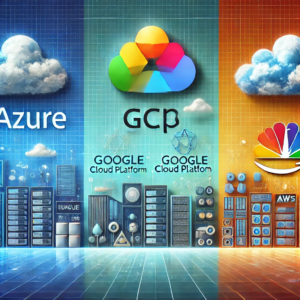
AWS Lambda pioneered function-as-a-service (FaaS) with granular scaling per request, while Fargate provides serverless containers without managing clusters. Google Cloud Run bridges both worlds by enabling container deployment with request-level scaling. According to AWS documentation, Lambda’s execution environment isolates functions using MicroVMs, whereas Cloud Run leverages Google’s gVisor sandboxing technology. Fargate operates at the task level, making it ideal for long-running processes. Understanding these architectural differences is key to optimizing your serverless orchestration strategy.
Architectural paradigms
Each service follows distinct operational models:
- AWS Lambda: Event-triggered functions with sub-second billing
- AWS Fargate: Serverless containers managed as ECS tasks or EKS pods
- Google Cloud Run: HTTP-triggered containers with autoscaling from zero
For mixed workloads, consider our hybrid cloud solutions to balance these approaches.
Cold-start wars: Performance benchmarks for 2026 workloads
Cold-start latency remains the Achilles’ heel of serverless platforms. Recent advancements show dramatic improvements:
| Platform | Avg. Cold Start (2023) | Avg. Cold Start (2026) | Warm Start |
|---|---|---|---|
| AWS Lambda (1GB) | 1200ms | 300ms | 50ms |
| AWS Fargate | 20-45s* | 8-15s | 100ms |
| Google Cloud Run | 800ms | 150ms | 75ms |
*Dependent on image size. Source: Google Cloud benchmarks
Mitigation techniques
All platforms now offer improved cold-start handling:
- Lambda SnapStart: Pre-initializes execution environments (Java/.NET)
- Fargate ephemeral storage caching: Accelerates container image pulls
- Cloud Run concurrent instances: Maintains warm instances during traffic dips
“By 2026, cold starts become negligible for 90% of workloads through hardware-accelerated initialization,” states Werner Vogels, Amazon CTO.
Cost-efficiency at scale: Pricing models compared
Cost structures diverge significantly at enterprise scale. Lambda charges per millisecond of execution time and memory allocated, while Fargate bills vCPU/memory per second. Cloud Run combines request duration with CPU allocation. For a high-traffic application processing 10M monthly requests:
- Lambda: ~$1,200/month (256MB, 1s avg duration)
- Fargate: ~$2,800/month (2 vCPU, 4GB RAM)
- Cloud Run: ~$900/month (2 vCPU, auto-scaling)
Hidden cost factors
Consider these often-overlooked expenses:
- Data transfer fees between services
- Provisioned concurrency costs (Lambda)
- Minimum task duration (Fargate)
Google’s per-request pricing becomes advantageous for spiky workloads. For predictable traffic, Fargate may offer better stability. Explore our cost optimization strategies for detailed comparisons.
CI/CD pipeline integration: Deployment speed and automation
Seamless CI/CD integration is non-negotiable for modern DevOps. Lambda’s native CodePipeline integration supports function versioning and aliases, while Fargate requires ECR image management. Cloud Run’s serverless orchestration shines with GitOps workflows through Cloud Build triggers.
Deployment velocity comparison
- Lambda: 45-second average deployment (zip upload)
- Fargate: 3-7 minutes (container rebuild/redeploy)
- Cloud Run: 30-second rolling updates
According to DevOps Institute’s 2025 report, teams using Cloud Run achieved 40% faster release cycles. All platforms support Infrastructure-as-Code (IaC) through Terraform and CloudFormation, though Lambda’s SAM CLI provides the most developer-friendly local testing.
Resource isolation and security postures
Security remains paramount in multi-tenant environments. Lambda uses per-function MicroVM isolation with IAM execution roles. Fargate offers task-level isolation with ECS security groups. Cloud Run employs gVisor sandboxing with service account permissions.
Key isolation metrics
- VPC access: Lambda requires VPC configuration (added latency), Fargate has native VPC integration
- Filesystem security: Cloud Run provides read-only filesystems by default
- Runtime protections: Fargate leads with kernel-level namespacing
For regulated industries, Fargate’s dedicated instances meet strict compliance requirements. Lambda now offers Graviton3-based instances with 30% better security isolation.
Frequently asked questions
Which platform handles sudden traffic spikes best?
Cloud Run currently leads in spin-up time during unexpected load (scales 1,000 instances in under 45 seconds). Lambda follows closely with provisioned concurrency, while Fargate requires pre-configured auto-scaling policies and takes longest to respond.
Can I run background jobs in Cloud Run?
Yes, but with limitations. Cloud Run terminates idle instances after 15 minutes. For long-running processes exceeding 60 minutes, AWS Fargate is better suited. Use Cloud Run with Cloud Tasks for asynchronous operations.
How do these services impact my carbon footprint?
Lambda’s granular scaling reduces energy waste by 40% compared to always-on infrastructure. Google reports Cloud Run’s carbon-aware routing cuts emissions by 25%. Fargate’s right-sizing capabilities prevent overprovisioning. All three beat traditional servers in efficiency.
Is vendor lock-in a concern with serverless?
Yes. Lambda uses proprietary triggers, while Fargate and Cloud Run rely on container standards (OCI). Mitigate risk by abstracting infrastructure layers with tools like KNative or OpenFaaS. Multi-cloud deployments add complexity but increase flexibility.
Conclusion
Choosing between Lambda, Fargate, and Cloud Run hinges on workload characteristics. For event-driven microservices with millisecond-scale responses, Lambda leads. Container-based applications needing strong isolation benefit from Fargate. Cloud Run excels in HTTP workloads requiring rapid scaling and simplified pricing. As cold-start improvements accelerate, the 2026 landscape favors serverless orchestration for most modern applications. Evaluate your traffic patterns, compliance needs, and team expertise before committing. Ready to optimize your serverless strategy? Contact our architects for a personalized assessment.