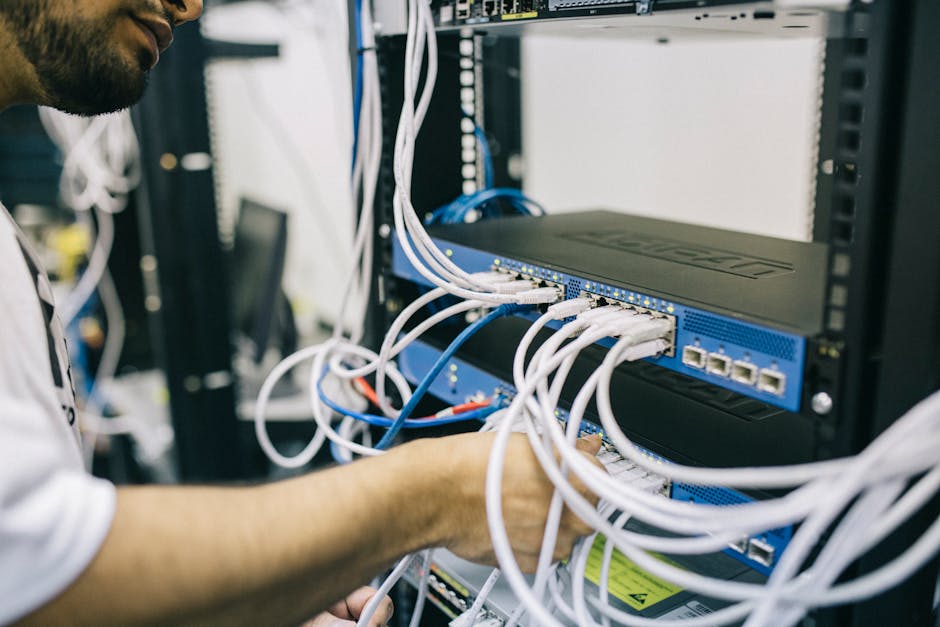
Image by: Field Engineer
The evolving threat landscape for network infrastructure
Did you know that unsecured routers account for 60% of initial access points in enterprise breaches? As network engineers, we often treat routers as trusted workhorses, but modern threats like state-sponsored hacking groups specifically target Cisco IOS vulnerabilities. This guide delivers critical Cisco router security hardening techniques to defend against infrastructure threats targeting routing tables, management interfaces, and firmware exploits. You’ll learn to audit configurations using the latest IOS features—transforming your routers from vulnerable gateways into hardened assets. We’ll cover SSH implementation, management plane lockdown, service elimination, and AAA protocols—all tailored for professionals managing complex environments. Recent Cisco Talos reports show a 200% increase in router-specific exploits since 2021, making these skills non-negotiable for infrastructure protection.
Why traditional security measures fail
Legacy approaches like basic password protection crumble against today’s credential-stuffing attacks and memory corruption exploits. The shift to encrypted management protocols isn’t optional—it’s survival. Consider the Cisco IOS attack surface which includes over 20 potentially exploitable services enabled by default. Network engineers must adopt a zero-trust posture, starting with these critical areas:
- Management interface exposure to public networks
- Unencrypted protocols like Telnet and HTTP
- Default credentials in SNMP communities
- Absence of control-plane safeguards
Securing the management plane: SSH and access control
The management plane is your router’s nervous system—and attackers’ primary target. Start by eliminating Telnet completely and implementing SSHv2 with cryptographic best practices. Use the following configuration snippet to enforce modern algorithms:
ip ssh version 2
ip ssh rsa keypair-name SSHKEY-4096
ip ssh server algorithm encryption aes256-ctr
ip ssh server algorithm mac hmac-sha2-512
ip ssh server authentication-retries 3
Complement SSH with strict access control lists (ACLs) applied to virtual terminal lines and management interfaces. A layered approach includes:
- Infrastructure ACLs (iACLs) blocking bogons and private IPs at the edge
- Management plane ACLs restricting VTY access to jump hosts
- Rate-limiting login attempts to prevent brute-force attacks
Management interface hardening checklist
| Interface | Baseline protection | Advanced hardening |
|---|---|---|
| Console port | Session timeout (exec-timeout 5 0) | Role-based privilege separation |
| Auxiliary port | Disable (no service password-encryption) | Physical port deactivation |
| VTY lines | ACL restrictions (access-class 23 in) | SSH certificate authentication |
| HTTP/HTTPS | Disable (no ip http server) | API gateway with OAuth |
Disabling unnecessary services to minimize attack surface
Cisco routers ship with numerous services enabled for convenience—creating dangerous backdoors in production environments. The CISA recommends disabling 14 high-risk services including CDP, IP source routing, and TCP small servers. Execute this critical command sequence:
no service tcp-small-servers
no service udp-small-servers
no ip bootp server
no ip http server
no ip http secure-server
no ip source-route
no cdp run
Particular attention should go to SNMP configurations—default community strings are responsible for 34% of router compromises according to Cisco’s 2023 threat report. If SNMP is necessary, implement view-based access control and SNMPv3 with encryption:
- Create read-only views excluding sensitive OIDs
- Enable AES-256 encryption for SNMPv3 groups
- Apply ACLs to limit polling stations
Implementing AAA for robust authentication and accounting
Local username databases can’t scale or audit effectively—that’s where AAA (Authentication, Authorization, and Accounting) becomes essential. Integrate TACACS+ or RADIUS for centralized control using this framework:
aaa new-model
aaa authentication login default group tacacs+ local
aaa authorization exec default group tacacs+ local
aaa accounting exec default start-stop group tacacs+
When selecting protocols, consider these operational factors:
AAA protocol comparison
| Feature | TACACS+ | RADIUS |
|---|---|---|
| Encryption | Full packet encryption | Password-only encryption |
| Command authorization | Per-command granularity | Limited session-level |
| Protocol | TCP/49 | UDP/1812 |
| Accounting detail | Command logging | Basic session tracking |
For high-security environments, implement multifactor authentication using Cisco’s Duo integration. Always maintain local fallback accounts with Type 9 (scrypt) password hashing via enable algorithm-type scrypt secret.
Advanced protections: Control plane policing and logging
Modern Cisco router security hardening requires defending the control plane itself. Control Plane Policing (CoPP) mitigates denial-of-service attacks by rate-limiting traffic destined for the CPU. Build a policy map like this example protecting OSPF and BGP sessions:
class-map match-all CRITICAL-PROTOCOLS
 match access-group 110
!
policy-map COPP-POLICY
 class CRITICAL-PROTOCOLS
  police 80000 conform-action transmit exceed-action drop
 class class-default
  police 15000 conform-action transmit exceed-action drop
!
control-plane
 service-policy input COPP-POLICY
Complement CoPP with comprehensive logging using severity levels 0-4 for real-time threat detection. Stream logs to a SIEM via encrypted syslog (RFC 5425) and enable sequence numbers with service sequence-numbers to detect tampering. Critical logging enhancements include:
- Logging ACL violations with
log-inputparameter - Enabling login on-failure logging
- Configuring NTP authentication to prevent log spoofing
Frequently asked questions
How often should I audit my Cisco router security configurations?
Perform comprehensive audits quarterly using Cisco’s AutoSecure framework and before any major network changes. Monthly checks should verify AAA functionality, SSH key rotations, and ACL integrity. Automated tools like RANCID can compare configurations against baselines and alert on unauthorized changes.
Is SSH sufficient for management plane security?
While SSH is essential, it’s not sufficient alone. Combine it with management interface ACLs, role-based access control (RBAC), and encrypted AAA protocols. For critical infrastructure, implement out-of-band (OOB) management networks physically separated from production traffic. Always use certificate-based authentication over passwords where possible.
What’s the most overlooked service to disable on Cisco routers?
IP Directed Broadcasts (enabled by default) are frequently exploited in amplification attacks. Disable with no ip directed-broadcast on all interfaces. Similarly, disable MOP (Maintenance Operation Protocol) with no mop enabled—a legacy service vulnerable to packet injection attacks.
How does control plane policing differ from standard ACLs?
Standard ACLs filter transit traffic, while CoPP specifically protects the router’s CPU by regulating traffic destined to the control plane. It prevents resource exhaustion attacks targeting routing protocols, management sessions, and other processes requiring CPU cycles. Unlike ACLs, CoPP uses QoS-like policy maps for granular rate-limiting.
Conclusion
Cisco router security hardening isn’t a one-time task—it’s an evolving discipline requiring continuous refinement. By implementing SSHv2 with strong ciphers, locking down the management plane, eliminating unnecessary services, and enforcing AAA with centralized authentication, you create layered defenses against modern threats. Remember: the average attacker dwell time on networks is 78 days—plenty of time to exploit poorly secured routers. Start today by auditing your configurations against the techniques outlined here. For ongoing protection, explore CSIRT frameworks and consider automated compliance tools that enforce these hardening standards across your infrastructure. Your routers are the internet’s backbone—fortify them accordingly.